Bhavananda: A Brief Biography
by Henry Doktorski (October 2026)

ISKCON guru His Divine Grace Srila Bhavananda Goswami Vishnupada (Charles Bacis) (c. early 1980s)
According to our best sources, the former ISKCON guru known as His Divine Grace Srila Bhavananda Goswami Vishnupada was born Charles Bacis on October 15, 1939 in Brooklyn, New York. By the mid-to-late 1960s he was known in the New York City avant-garde underground art and theater scene as an actor and independent filmmaker. He also worked as a professional interior decorator. Charles attended events at The Factory, the studio of Andy Warhol (1928-1987), a leading filmmaker and artist of the Pop Art movement. The Factory served as a gathering place for a wide circle of artists, musicians, writers, and underground personalities who contributed to the studio’s reputation as one of the most influential creative hubs of its era. Charles Bacis was a rising New York figure who appeared in the avant-garde film Ciao! Manhattan alongside iconic Warhol superstar Edie Sedgwick. Some accounts also link him to work surrounding Warhol’s landmark 1966 project, The Chelsea Girls.
In 1969, Charles abandoned the glamorous, sexually promiscuous, drug-fueled and flamboyant life of a rising underground gay film star and filmmaker and joined ISKCON in Los Angeles. He was initiated later that year and became known as Bhavananda dasa Brahmachari. He swiftly rose through the ranks of the ISKCON hierarchy, serving in positions of leadership at ISKCON Los Angeles, ISKCON Detroit, ISKCON New York, ISKCON Australia and ISKCON Mayapur, India. He became a swami, a lifelong celibate monk. The 1975 GBC meeting minutes reveal that Bhavananda Maharaja was sent from Los Angeles to New York City for preaching six months a year. In the historic letter from Tamal Krishna Goswami to all GBC men and ISKCON temple presidents of June 9, 1977, Bhaktivedanta Swami Prabhupada listed His Holiness Bhavananda Gosvami as one of the eleven ritvik priests authorized to initiate new disciples on Prabhupada’s behalf.
Many times Bhaktivedanta Swami Prabhupada praised his disciple Bhavananda. Ramesvara Swami remembered, “Bhavananda Goswami had been a professional decorator before meeting Srila Prabhupada, so Prabhupada engaged him in that propensity by asking him to decorate the altar for the first Radha-Krishna deities in America. [The small Sri Sri Rukmini Dvarakanath deities at the Los Angeles ISKCON temple at 1975 South La Cienega Boulevard, installed July 16, 1969—ed.] Bhavananda had just completed his work and was bowing down before the forms of Radha and Krishna when Srila Prabhupada entered the room. ‘Oh, very nice,’ Prabhupada said. ‘Who has done this?’ ‘I have, Srila Prabhupada,’ Bhavananda replied. ‘Yes,’ said Srila Prabhupada, ‘you can decorate the naked dancing club and go to hell, or you can decorate the temple and go back to Vaikuntha.’”
Hari Sauri dasa wrote about Prabhupada praising Bhavananda for distributing books in India, “Bhavananda Goswami returned today from the boat program, enthusiastic and full of wonderful stories about the response they have been receiving. Prabhupada relished hearing about the daily programs in the villages and big receptions they got wherever they went. Bhavananda described how they simply dock the boat, perform kirtana, and then walk in procession with Sri Sri Gaura-Nitai. The villagers become very eager to have the party visit their homes. The devotees make it a point to sell everyone a Gitar-gana, which they daily distribute by the hundreds. Prabhupada was excited at the news of the book sales. He made it clear this was the success of the party. He praised Bhavananda that he had begun book distribution in India. He now wants 100,000 Gitar-ganas printed immediately.”
In addition, Prabhupada deeply trusted Bhavananda with developing the ISKCON project in Mayapur, West Bengal. He often affectionately referred to him as “our Bhavananda” and ensured he was supported in managing the growth of the center and feeding pilgrims.
The July 10, 1977 attack at Mayapur.
Satsvarupa dasa Goswami (Stephen Guarino) wrote about the attack at Mayapur in Srila Prabhupada Lilamrita, Vol. 6:
Tamal Krishna received a phone call from Gopal Krishna. The Mayapur temple had been attacked by a gang of three hundred dacoits (hoodlums). Five devotees were wounded and in the hospital. Bhavananda Goswami had fired a shotgun at the attackers, injuring two. The police, who didn’t arrive until two hours after being called, had arrested Bhavananda and put him in jail. Srila prabhupada became disturbed. “If the dacoits attacked and we used our shotgun,” he said, “what is wrong?”
Later that day Prabhupada heard The Hindustan Times’ version of the attack. According to the news report, some cows had wandered onto the ISKCON property, and the devotees had beaten the cows. This had angered the villagers, who on coming to the temple to complain, had been shot at. Two had been injured. The article named Bhavananda Goswami and at the end mentioned that the founder of the temple, A. C. Bhaktiveanta Swami, had not been present.
Srila Prabhupada heard the article, made a few comments, and went on with his afternoon’s writing and translating as usual. But late that afternoon he called for Tamal Krishna. “I am afraid of a big conspiracy,” he said. “The last line of the article says that the founder-acharya was not present. They were sorry. They would have arrested me and put me in jail.”
Tamal Krishna scoffed that the news article was one-sided. “That doesn’t sound right,” he said, “that the devotees beat the cows. Devotees don’t beat cows.”
Within a few days, a letter came from Gopal Krishna giving the facts of the Mayapur incident. About fifty Muslim men were stealing crops from the ISKCON land. When Nitai-canda tried to stop them, they attacked him, cutting his head in three places. Later, while he was being treated in the temple infirmary, the men came and beat Nitai-canda and stripped one of the ladies naked. Meanwhile, another 250 men attacked, breaking the gates, cutting phone and electric wires, and destroying the water pumps. Wanting to scare the mob, Bhavananda had fired a shot in the air, but when they did not disperse he fired another shot, injuring two men.
In the meantime, the attackers had broken both hands of one of the gurukula teachers and beaten many other devotees. Two hours later the police arrived and recommended the devotees go to Krishnanagar police station—twenty miles away—to file a complaint. When the devotees had reached the station, they had been arrested, and the two seriously injured devotees were denied medical treatment. Bhavananda Goswami was still in jail. Prabhupada said it was a plot to drive away the Hare Krishna men. “They want that all Bengal be completely godless,” he said. . . .
As Prabhupada spoke of the Mayapur devotees who had been willing to sacrifice their lives for Krishna, he became choked with emotion and began to cry. “Krishna will give them protection,” he said, “our Mayapur men.” He mentioned how Haridasa Thakur had also been put into jail and beaten and how Prahlada Maharaja had been tortured, until Lord Nrsimha had appeared. “Don’t be worred,” said Srila Prabhupada, crying, and speaking as if all his Mayapur devotees were directly in front of him. “Krishna will protect you. We are doing our best as far as our intelligence goes. Chaitanya Mahaprabhu wanted that in every nook and corner of the world this movement should be pushed. We are limited.” . . .
A few days later a full, on-the-scene report came in the mail from Jayapataka Swami in Mayapur. The local Hindus of Mayapur were outraged at what had happened and were mobilizing mass petitions in support of the ISKCON temple. Although the newspaper reports were false, gradually people were learning the facts. Jayapataka reported vivid details of Bhavananda and other devotees being marched through Navadvipa in chains on their way to court and the people of Navadvipa offering them respects. The devotees were still in jail, he said, constantly chanting Hare Krishna. . . . Prabhupada . . . commented that the enemies had thought they were digging up a garden snake by attacking Krishna’s devotees, but they were finding that they had in fact unearthed a cobra.
According to Satsvarapa’s Srila Prabhupada Lilamrita, after seven weeks in jail, Bhavananda was released around August 27th, and met Bhaktivedanta Swami Prabhupada the next day at the Delhi airport, just prior to Prabhupada’s departure for Great Britain. Satsvarupa explained:
Bhavananda Goswami, who had just been released from jail in Bengal, had arrived in time to see Srila Prabhupada. Bhavananda approached the car and placed his head on Prabhupada’s feet. “How are you?” Prabhupada asked. Bhavananda reported that everything was improving in Mayapur. All the local sadhus and citizens were now siding with ISKCON against the hoodlums who had attacked the temple.
Satsvarupa does not explain what were the charges filed against Bhavananda and ISKCON, if they appeared in court or not, nor why was Bhavananda suddenly released from jail after seven weeks of incarceration.
An alternate—and possibly more accurate?—version of the attack on Mayapur.
Was the official ISKCON report, as noted in Srila Prabhupada Lilamrita, accurate? Some say not. Sri Krishna dasa (Christopher Colm), a former disciple of Satsvarupa dasa Goswami, reported, “Senior devotees at Gita Nagari (where I lived at the time) told me about the terrible incident at Mayapur, India, in the mid-1970s when it seemed the entire town came and attacked the ISKCON Mayapur project. The conflict started because the villagers were angry because Bhavananda had been having sex with one or more of the local Bengali boys. They attacked the devotees at Mayapur ISKCON with machetes and other weapons, and Bhavananda shot one of the attackers with a gun and was arrested by police and incarcerated in jail for a time. The ‘official’ story that we heard was that an angry mob attacked the temple and Bhavananda courageously fought off the attackers. Most ISKCON devotees thought he was the hero. But he was actually the villain. The mob of villagers wanted to punish him for sexually abusing their children.”
This version is supported by the observation of an ISKCON gurukula alumnus who was with Bhaktivedanta Swami Prabhupada when Prabhupada first heard the news about the armed attack on the Mayapur ISKCON complex. Prabhupada’s immediate response was surprising. Vrndavana Brannon Parker remembered:
I was a student at the Bhaktivedanta Gurukula in Vrindaban, India, from age nine to twelve (1976-1978). Srila Prabhupada visited the Vrindaban garden nearly daily, and many of us students got to spend time with him there. A few of us were appointed daily to read scripture and sing bhajans while Prabhupada relaxed on a cement bench with a few pillows in his garden. The Guest House kitchen was very close to the garden, and we boys often cooked in that kitchen. I think since we were always by the garden doing service, we were also assigned garden duty as well, which included making sure the fake monkey impaled on a stick was positioned properly to announce what will happen to a monkey if he enters this garden. The monkeys were majorly unimpressed.
I was with Srila Prabhupada in his garden with Sebastian Leela Smarana Ickrath when someone came in and informed Prabhupada of the attack on Mayapur. I expected Srila Prabhupada to call out the demon Muslims for being so envious as to attack, but instead he quietly said, “Just see the results when you disobey your spiritual master.”
As for Bhavananda Swami, a gurukuli punmaster nicknamed him “Bob-On-The-Knob-Ananda.” Sorry if any aparadha, just sharing, not intended to upset anyone. Just sharing some historical facts from my unique perspective. I recall Bhavananda visited Los Angeles when I was in a play. He watched and was impressed and said, “That boy Vrndavana is a very good boy.” I felt creeped out (knowing of his proclivities before I knew what proclivities even were).
An eyewitness report.
Yajñeśa dasa ACBSP (Jean-Jacques Porée)—from Trouville-sur-Mer, a fishing village on the English Channel in the region of Normandy in France—initiated in February 1976, was in Mayapur during the mob attack. He tells us:
I started taking prasad in the kitchen around 4 pm with a few other western devotees on July 10th of 1977. We had a “special” prasadam with a few extras, like chapatis or puris and some subji. Nitai Chand would also join us sometimes. Around 10 devotees maximum. I was a little late that day, so some devotees had already finished and left. Then I noticed that some women usually doing service around the kitchen (about 5) got agitated and while coming into the kitchen from the outside wall where they would have their rooms, took some children with them and hastily went upstairs, behind a locked door. I had not finished taking prasadam when I saw Syamsundar, the head cook, tie his dhoti short as if he was going in a fight and grab a huge spoon (those which were used to cook in huge pots) as if he was preparing for a fight, and left the kitchen looking annoyed without explanation. I stayed then alone for a few minutes not hurrying at all and not understanding what it was all about. I was taking my time to honor the prasadam, without figuring out what was happening. I learned later that the mob was pushing and forcing the main gate open at that time.
After a few minutes I saw three unknown skinny guys looking like threatening local villagers look at me from outside the kitchen, wondering about me sitting quietly eating. They left (maybe thinking it was a trap?) but came back after two minutes and slowly approached me cautiously looking around inside the kitchen. I was such a fool at that time, thinking there was no danger in the holy dham as all dhama-basis [residents of the Holy Dhama of Mayapur] were actually four-handed Visnu forms and could not in any way be harmfull! So I offered them to take prasad and they immediately started hitting me hard with their bamboo poles. One of them had a harpoon and I realized too late they were to kill me on the spot. But as I was still sitting in a lotus position in front of my leafplate, I could not stand up but I tried to protect my head as far as I could with my arms. I was hit many times. I do not know for how long until I fainted totaly unconscious for at least an hour. It was almost night, maybe 2 hours later when I woke up. It was deserted and silent in the kitchen. I felt quite shocked and sleepy, so I went hiding. In the big prasadam hall was a huge painting of Krishna and Balaram. (It may still exist today.) I locked the 3 big doors from inside and felt like going to sleep on the bare floor was okay for now. I may have slept another hour when I heard several gunshots; but figured it was better to stay put and wait before going out.
Bhavananda becomes a guru.
Bhaktivedanta Swami Prabhupada passed away in Vrindaban, India on November 14, 1977. Four months later, at the March 1978 GBC meetings in Mayapur, Bhavananda Swami—along with ten other ISKCON leaders—was promoted to the position of ISKCON initiating guru, and reconfirmed as co-GBC, along with Jayapataka Swami, for the Mayapur India Project in West Bengal. A year later he was appointed the GBC representative for Vrindavan, Central India, and the co-GBC for Mayapur and Michigan. That same year, in 1979, he accepted the honorific title “Srila Visnupada.” In 1981, Bhavananda served as Chairman for the GBC. In 1983, Bhavananda was appointed co-GBC representative for New York, New Jersey and Connecticut, along with Prabhupada Krpa Goswami and Ramesvara Swami. In 1985, Bhavananda was officially appointed the GBC representative for Australia, although he undoubtedly had influence there much earlier.
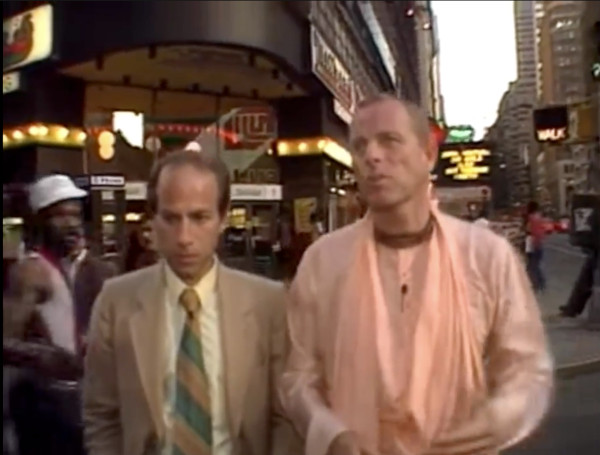
Bhavananda preaches in New York City, “Stop murdering your children in the womb. Stop having sex with four-year-old girls and five-year-old boys. Abusing your children. It’s insanity.” The man with Bhavananda is Siddhanta, an ISKCON actor, from an ISKCON Television (ITV) film titled Bhavananda On Broadway, a sequel to Bhavananda in Hollywood, (undated, c. mid-1980s).
Bhavananda suspended as guru.
In August, 1985, the GBC suspended Bhavananda as an initiating guru and GBC representative after a brahmachari in Atlanta Georgia claimed that five years earlier, Bhavananda had tried to seduce him. Bhavananda admitted to guilt. At the March 1986 GBC meetings he was reinstated. However, a year later in 1987, Bhavananda was removed as a GBC member, along with Ramesvara, Bhagavan (who resigned), and Brahmananda. Bhavananda’s status as an ISKCON guru was also suspended. At this meeting Kirtanananda Swami was expelled from ISKCON.
Bhavananda was just not guru material, as he had been engaging in homosexual activities for several years before and after Bhaktivedanta Swami Prabhupada’s disappearance, beginning in 1974 or earlier. In 1974 or so, he tricked a novice devotee—Sulochan dasa (Steve Bryant)—into giving him fellatio. As explained in Killing For Krishna:
Sulochan was an excellent masseur and liked to offer this intimate personal service for the pleasure of his godbrothers. Naranarayan dasa Visvakarma (Nathan Baruch Zakheim)—an ISKCON artist who served as the Art Director for the BBT—remembered the time he met Sulochan in Detroit, “During a visit to Detroit ISKCON in 1974 or 1975, I once again met Sulochan. He was very friendly, and he really appreciated all the devotees. He was a very good masseur, and he gave me a massage. He told me that his personal objective was to give full body massages to all of Prabhupada’s male disciples; as a means of giving them some personal seva [service]. He felt it an honor to do this.” Naranarayan also remembered a curious conversation he had with Sulochan during his massage:
While Sulochan was massaging me, he told me a very creepy story. Some time earlier, he had given Bhavananda a full body massage. He said that Bhavananda requested Sulochan to “go down on him” [perform fellatio], that it was a spiritual act of advanced understanding that Sulochan, as a relative neophyte, could not possibly yet understand.
Sulochan objected, and declared that this was totally against the regulative principles to which he had vowed his life. Bhavananda insisted and said that doing this would “transcend” the four regulative principles, which (after all) pertained only to the material body on the material plane, and that this act with Bhavananda was far more advanced on the “actual” spiritual platform than Sulochan could even begin to understand. Sulochan did not want to contradict a highly charismatic person whom he considered to be almost on the level of guru, or at least much more spiritually advanced than himself. He complied.
He confided in me, as he had known me from Los Angeles, and considered that I could give him some possible alternative understanding than the one given by Bhavananda. I gave him a clear understanding of Bhavananda’s life-long homosexuality, his cavorting with other homosexuals in New York with Andy Warhol and his appearance in Warhol’s 1966 art house classic film: Chelsea Girls. Sulochan was deeply shocked, but took it philosophically. After all, he had acted in good faith.
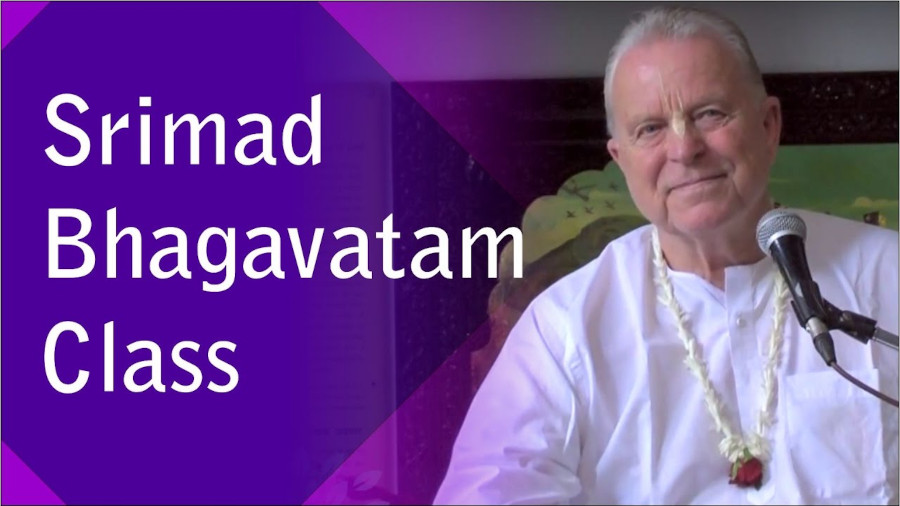
Bhavananda presented a lecture on Srimad Bhagavatam (7.14.01) at a class at ISKCON Juhu Beach, Mumbai (November 20, 2016).
While serving as co-GBC at Mayapur, Bhavananda engaged in sexual activities with a Bengali taxi driver, with several Bengali boys, and with the teenage brahmachari mentioned earlier. Following is an excerpt from Eleven Naked Emperors:
ISKCON “guru” involved in sexual molestation of a minor
Coincidentally, during the [August 1985 Emergency GBC] New Vrindaban meetings, a message came from a brahmachari in Atlanta, Georgia, alleging that one of the ISKCON zonal acharyas (who had for years been suspected of having homosexual relations with boys and young men) had tried to have sex with him in Vrindaban, India, five years earlier, when he was only fifteen or sixteen years old. This disturbing news served to strengthen the resolve of the guru reformers and create fear in the zonal acharyas who realized that the end of their reign was fast approaching.
This revelation was not, however, the first report of Bhavananda’s illicit activity with boys and young men. Years earlier, around 1976, a devotee accidentally observed Bhavananda having sex with an Indian man in Mayapur. Visnugada dasa, the temple president of ISKCON Towaco, New Jersey, reported, “When I joined the movement, Bhavananda was the temple president of ISKCON New York. I heard much rumor about Bhavananda’s alleged sexual indiscretions. Once, around 1976, a Mexican devotee witnessed Bhavananda having sex with an Indian man in the Mayapur goshala (cow barn). The Mexican devotee tried to report this infraction by a GBC man to Srila Prabhupada, but he was prohibited from seeing Prabhupada by some of the GBC men, such as Gargamuni. Shortly after, Bhavananda observed Chaturmasya—a four-month period of intense fasting during which the penitent eats only once a day. Years later, I heard Bhavananda was investigated for allegedly having sex with an Indian taxi driver. In addition, Bhavananda’s personal servant, his sidekick, was a young Australian devotee, small in stature, named Bala. The two traveled often together and sometimes stopped at a Singapore hotel where they’d go to the beach.”
B. V. Suddhadvaiti Maharaja, formerly Jayantakrd dasa, recalled, “About Jayapataka Swami, I heard many times that Srila Prabhupada had told him and Bhavananda to accept 10,000 disciples each. But I take that as an encouragement for preaching, [not an actual order]. How could Srila Prabhupada recommend Bhavananda to be a guru when he was a known active gay?! I joined ISKCON in 1973 and already in 1975 I heard Bhavananda had been caught engaging in homosexual activities with a Bengali taxi driver in the fields on the ISKCON Mayapur property. But Srila Prabhupada, the acharya, didn’t know?”
It was no secret in ISKCON that Bhavananda enjoyed clandestine sex with boys and young men. A former disciple of Satsvarupa dasa Goswami, Sri Krishna dasa (Christopher Colm), recalled:
Bhavananda was infamous in ISKCON for his homosexual and pedophiliac activities. Around 1980, or perhaps very soon after, Bhavananda was severely chastised by my spiritual master, Satsvarupa dasa Goswami. One of my closest friends served as Satsvarupa’s personal servant during a trip to India with our guru. He later told me that while in India, Satsvarupa was ordered (by the GBC I assume) to chastise Bhavananda for his sex life with men. My friend told me that Satsvarupa shouted and yelled at Bhavananda: “We know what you did!” and was using expletives too. . . .
In addition, I was made the butt of jokes when Bhavananda, Harikesh, Jayatirtha and Satsvarupa came to Gita Nagari early in 1978 just after becoming “Zoned Outs.” I was nineteen years old at the time, and I guess gay men thought I was cute because Bhavananda was really interested in me, asking many questions while I had prasada with the other young brahmacharis. Then he asked me to go with him on his mission. When I made some comment that I would not go, he left, and all the other brahmacaris were laughing at me that he “liked” me, he thought I was sexy.
Many ISKCON leaders had heard legitimate reports about Bhavananda’s illicit sexual activities with boys and young men, but they covered for him by publicly denying the reports. They claimed that the accusations were only rumors. Mark Middaugh, a devotee who served in ISKCON for twelve years, recalled:
After graduating high school in May 1976, I went with members of the Dallas temple to the Los Angeles Ratha Yatra. At New Dwaraka I heard two of Bhavananda Swami’s morning talks and was shocked by how much he talked about sex. He presented sex as an utterly disgusting task, “We should spit at the thought!” I recall him saying, “Sex is sex.” Sex was all horrible and disgusting. Bhavananda came off like a movie star. He was such an arrogant individual.
I recall also (I was there) when Tamal Krishna Goswami gave a morning class at New Dwaraka some years later, around 1985, and at the end he went into an explosive tirade. Bhavananda had been accused of having sex and Tamal Krishna Goswami dealt with the accusation in the following manner: he let the audience have it! He spewed out a vast storm of toxicity that left all of us rank-and-file devotees putting our heads down in shame. He told us that Bhavananda was a great devotee; he could give outstanding classes, on and on. Bhavananda was better than all of us! We were all made to feel shameful.
I recall sitting there and listening and feeling bad! I was the shameful person, not Bhavananda! Hearing those things from Tamal Krishna Goswami put my world in a nihilistic spin. I wondered, “Was there truth anymore?” I had believed my entire life that sex with children was illegal and morally corrupt. At that time, I still thought the eleven new emperors were gods on earth, as good as Jesus Christ.
Ravindra Svarupa (William H. Deadwyler, III), the president of ISKCON Philadelphia and leader of the Guru Reform Movement, remembered when he first heard confirmation of the accusation that Bhavananda had made sexual advances to a teenage boy in India:
In 1985 . . . there was a meeting of the North American GBC together with the temple presidents in New Vrindaban, I guess to try to talk over this growing feeling of crisis about the gurus. . . .
At the same time, there were doubts about other gurus functioning. There were doubts about Ramesvara; many people believed he did not chant his rounds. There were doubts about Bhavananda; there were rumors of his having various sorts of sexual indiscretions with men. Kirtanananda was worrying a lot of people too.
At New Vrindaban we meet together, and, what had happened before that meeting, was that a devotee had come from India to stay at the Atlanta temple, and he was a very upset devotee, and finally he told the temple president in Atlanta that in Vrindaban Bhavananda had made sexual advances on him. This is a guy about twenty to twenty-one years old.
Rochan dasa (Van Charnell), the former Seattle ISKCON president who in the mid-1970s served as the Regional Secretary for Toronto, Montreal and Ottawa, recalled, “In 1985 and 1986, things came to a head. During the 1985 GBC meetings at New Vrindaban, it was announced that Bhavananda had been accused of having homosexual relations with young men. A brahmachari in Atlanta actually wrote a report saying that Bhavananda had seduced him and he even had it notarized by a notary public.”
Bhavananda confessed to having homosexual relations “many times” during his career as an ISKCON guru. “From around 1980 to 1982, I experienced severe problems with my spiritual life and I fell down many times,” Bhavananda admitted. “I developed a spirit of enjoyment, an enjoying spirit. . . . Of course I had hoped that these falldowns would not be known, but in our Society there are no secrets, because you can’t keep a secret from Krishna. He knows everything. When some rumor came up regarding some of these problems, I denied it and it was overlooked, at least on a certain level, but many, many godbrothers were not convinced.”
The GBC Privilege Committee discussed his case and ordered Bhavananda to refrain from initiating any new disciples until a future unspecified date when the committee might be convinced that he had rectified his behavior. Interestingly enough, the Privilege Committee determined that one of the main factors in Bhavananda’s fall down was the ISKCON zonal-acharya system. During an August 21st 1985 address to his disciples in New York City, Bhavananda confessed that he had “many flaws, inebrieties, [and] material desires.”
At this [August 1985 New Vrindaban] meeting it was presented to me that someone had testified that I had approached them for sex in Vrindaban in 1980, and I went to Balavanta and Rupanuga and Tamal Krishna Prabhus and told them, “Yes, that was right. It was true.”
When all of the presidents and senior men heard, naturally of course, they became concerned. . . . Their feeling was that this is another symptom that there is something wrong with our system, that this is going to go on like: “Ten little, nine little, eight little Indians, seven little, six little, five little Indians,” like that. So the Privilege Committee of the GBC, which is the body which is assigned to investigate breach of faith situations like this, met yesterday. . . .
The Privilege Committee meeting went on for some hours and their final result was that one of the main factors in the falldown of Bhavananda Goswami has been the acharya system that has been set up. . . . That doesn’t excuse me, but they all see that is one of the main factors and I also see that. . . .
So, in light of that, their recommendation to me is that for an indefinite period of time I not initiate, and that regarding my GBC activities I should continue as a GBC member with full authority as a GBC man, but I’m on probation which means that I will be watched to see that I reform myself. That was their decision. . . .
I was actually thinking anyway (see how Krishna fulfills your desire) I had been becoming so worn down from excessive traveling and even before I went to New Vrindaban and before this came up . . . I was seriously meditating on taking some time off anyway from initiating. I have over one thousand disciples and they have required—and I have given to them willingly—all of my time and life energy and that has required an inordinate amount of traveling and between the traveling and counseling and the responsibility and the karma, it has brought me to a point where I felt that I was on the verge of a total nervous breakdown or exhaustion. . . .
I have nothing to hide anymore. I’m not a 100% pure devotee at all. I have many, many flaws, inebrieties, material desires. . . . It’s my fault and on another hand it’s not my fault: it’s the system’s fault. Everything was thrust upon us.
Bhavananda reinstated as “guru”
At the February and March 1986 GBC meetings in Mayapur, during which the 500th anniversary of the birth of Lord Chaitanya was celebrated, members of the Guru Reform movement fought against established, powerful and entrenched opponents: the “divinely-appointed” zonal acharyas. The powerful influence of the establishment was manifest when the GBC reinstated Bhavananda as a guru in good standing, although he had been suspended only six months earlier after being confronted with an allegation of homosexual activities with a teenage brahmachari in Vrindaban, India; an allegation to which he confessed guilt.
Ravindra Svarupa explained, “The temple presidents from Australia arrived in Mayapur and demanded that Bhavananda be reinstated as guru. They exerted a lot of pressure on the Acharya Board and a secret vote was tabulated. I heard Bhavananda was reinstated by a majority of only one vote. Later, we discovered that the Australian temple presidents had been engaging in certain types of illicit sense gratificatory pursuits, which is why they wanted Bhavananda reinstated. Bhavananda, who enjoyed his own type of sense gratification, was lenient to the temple presidents, who enjoyed their particular types of sense gratification.”
One of the zonal acharyas, Hridayananda das Goswami (Howard J. Resnick), contested Ravindra’s statement above in an email to the author, “Completely false. Ravindra was not on the GBC, did not attend the meetings. I did. The GBC met as a body to deal with Bhavananda. There was no Acharya Board meeting. Bhavananda’s reinstatement was entirely based on a fear of the entire Australian Yatra exploding. Australia was doing very well, and the leaders all rushed into the GBC meeting and insisted, very emotionally, that if we didn’t let them manage the situation, we would destroy the Yatra. Ironically, the decision was based on a desire to not impose GBC authority on regional Yatras, and to let other leaders have a say in their own Yatras. Later, I was part of a small GBC committee that went to Australia to remove Bhavananda.”
To members of the Guru Reform movement however, reinstating Bhavananda was unthinkable, whatever the reason. A pretender acharya confessed to having homosexual relations with a minor and within six months he was considered completely pure and able to initiate disciples? The temple presidents were appalled. Bahudaka dasa (Peter Chatterton), the temple president of ISKCON Vancouver, British Columbia, and vocal proponent for the Guru Reform Movement, recalled, “The GBC [at the 1986 Mayapur meetings] is still largely controlled by the block of the original eleven acharyas. They’ve become very attached to this very big profile. They don’t want to give it up. . . . The GBC have to be men of the highest caliber. They [the GBC] have destroyed that by consistently refusing to clean house. Prabhupada set up a check and balance. He checked the GBC by saying that if anyone deviated they should be removed. But they’ve ignored that, . . . especially in the case of Bhavananda.”
Yasomatinandan, the GBC representative for Gujarat and co-GBC for Kenya and Chicago who had been selected to speak with B. R. Sridhar Maharaja four years earlier, passionately condemned the GBC’s reinstatement of Bhavananda as a zonal acharya. Yasomatinandan explained, “At the 1986 GBC meeting, the climax of hypocrisy was to take place. It exposed each of our leaders in his true light. . . . A fallen sannyasi is vantasi: one who eats his own vomit. Not only that, but a regular addicted homosexual with a long, almost continuous history of such incidences was voted in by our leaders. . . . Our great scholar Hridayananda Goswami flaunted all philosophical principles when he gave a sentimental rap . . . ‘Bhavananda is Prabhupada’s son and we must protect him,’ as if . . . devotional service means GBC-ship or guruship. . . . We all went back to our temples with our hearts broken and hopes shattered having given Lord Chaitanya a wonderful gift of a faggot guru in his parampara on his 500th appearance day. We were absolutely convinced our leaders were destroying ISKCON.”
Kirtanananda Swami (Keith Ham), one of the zonal acharyas who was already considering leaving ISKCON and starting his own society, claimed that ISKCON had become a “shadow society” because they reinstated a known homosexual, Bhavananda, as guru. Kirtanananda Swami said, “Their society [ISKCON] has become a shadow society, just like Gaudiya Math is a shadow society of what Bhaktisiddhanta established. Otherwise how is it possible that they whitewash fallen gurus? Why do they cover up? . . . I told them, ‘Frankly, you’re killing yourself and Prabhupada’s Society. These men are not guru. How can you say they are guru?’”
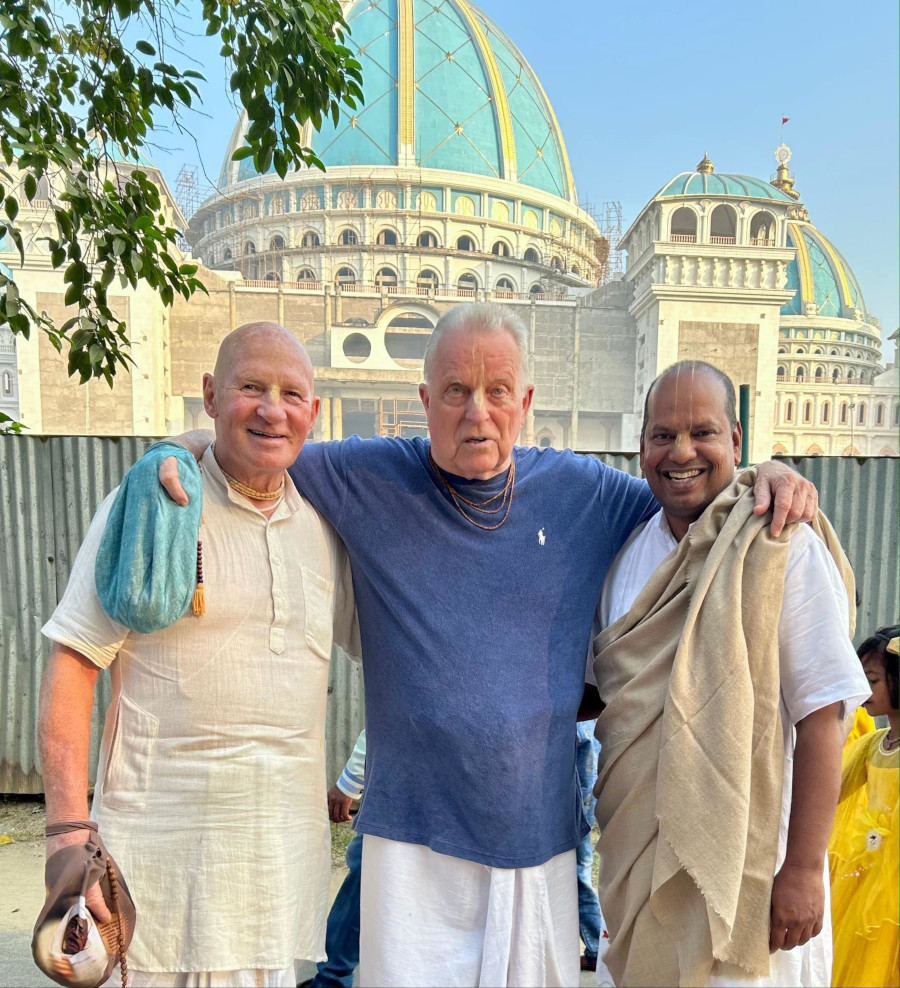
Former New Vrindaban sankirtan leader Dharmatma dasa (Dennis Gorrick), Bhavananda, and Vice Chairman of the Temple of the Vedic Planetarium (TOVP) and Co‑Director of ISKCON Mayapur Braja Vilas (undated).
The disciples’ perspective.
Naturally, the fall down of a guru is an extremely traumatic experience for any sincere disciple. We were taught that our gurus were pure devotees, free from material desires, and eternal associates of Lord Sri Krishna. In my first book of Hare Krishna history, Killing For Krishna: The Danger of Deranged Devotion, I wrote about “the intensity of the love I once-upon-a-time had for my ‘spiritual master,’ and the devastation I experienced when I finally realized he was a cheater. When one loves someone very much and discovers that one’s beloved is a cheater, the emotional trauma can be intense, deep-rooted, and long-lingering.”
In India In A Mind’s Eye: Travels and Ruminations of an Ambivalent Pilgrim, Steven J. Gelberg (formely Subhananda dasa) writes about his wife’s trauma surrounding the allegations against her spiritual master, Bhavananda Goswami Visnupada, and the smokescreen created by Bhavananda and his supporters to bewilder his disciples, instill doubt, confusion and fear in their hearts, and maintain their loyalty and big sankirtan collections:
Over the course of our three-day stay here in Mayapur [in late October or early November 1986—ed.], Sita and I find ourselves enmeshed in several troubling conversations with Australian devotees, all of whom are followers of an American ISKCON guru whose personal fiefdom includes Australia, New Zealand, and West Bengal. This man, Bumananda (name slightly altered), has become an object of heated controversy within the broader movement of late. Recently, this supposedly celibate swami was rumored to be having an ongoing sexual relationship with one of his disciples and is alleged to have had sexual dealings with Indian boys (minors) attending ISKCON schools here in India. A pattern of sexual misbehavior, lying, cover-ups, and intimidation of critics has become evident. Though Bumananda’s alleged offenses were extremely serious by ISKCON standards, the movement’s Governing Body Commission (GBC) let him off lightly with a token, temporary suspension of his license to initiate more disciples. Most ISKCON members had expected, at the very least, to see him stripped permanently of his guru status. Many became outraged by the GBC’s minimal action, which was seen as indicative of a GBC good-old-guru network. The case is being hotly debated throughout the organization.
It so happens that Bumananda is my wife’s guru. The alleged misdoings, and the immense hypocrisy they represent, had broken her heart. She had really loved this man: this handsome, eloquent, charismatic guy with the twinkling blue eyes, the melodious speaking voice, the graceful, magisterial mannerisms—the spiritual hero who would deliver her soul to Krishna. Though she had given him her heart and her soul (and a significant amount of fundraising money), when it became sufficiently evident that he was not what he cracked himself (and was cracked by others) up to be, she resolved – after much agonizing – to salvage her spiritual sanity by cutting her ties to him. She has survived her personal trauma and now feels a terrible sadness for those who still cling to him.
Here in Mayapur, the clingers, Bumananda’s disciples, are in heavy denial. They virtually have to be. The fall of a guru can have the most devastating effect on a disciple. In normative Hindu teaching the guru is everything: not only a shining exemplar of the spiritual path and living proof of its veracity, but an efficacious link between the devotee and God, a conduit for divine grace. A revelation of moral impropriety on the part of the guru can send a disciple into an existential tailspin. That is why so many ISKCON members are furious that this guy wasn’t thrown out of the game. Without there being a definitive, official end to Bumananda’s reign, his disciples are left having to suppress their doubts, rationalize his unkosher behavior, and risk total spiritual disenfranchisement should they decide to renounce discipleship. Because “His Holiness” lacks the integrity and graciousness to dismount his royal throne, his disciples are compelled to twist traditional teachings concerning the role of the guru perversely out of shape and seek solace in a pathetic know-nothingism.
Yasoda [a disciple of Bumananda from Australia who served as chief hostess at the Mayapur guesthouse—ed.] had put on a brave face during our earlier conversation [a couple days earlier—ed.]. According to her, His Holiness has recently announced to his disciples that real devotees will not be shaken by these false allegations (and, by inference, will remain loyal to him), while those of little faith will wander from the flock. In such a climate of opinion, a defecting disciple, rather than being viewed as a thoughtful person with the presence of mind to see when a good thing’s gone bad, instead will be branded a spiritual weakling, or worse, a heretic.
Yasoda has opted to demonstrate her spiritual fortitude by standing by her man. She reaches for any little reed of scriptural evidence that might suggest that her guru isn’t a bum. She, like her co-disciples, extracts passages from scripture, misquoted and misunderstood, intended to excuse his behavior in the name of the Kali-yuga (i.e., no one can be expected to be completely faultless in the present Universal Age of Degradation), or to exempt it altogether from the scrutiny of “mundane” morality. They all seem to be quoting the same passages: key verses are singled out, copied down, passed around, cited to death. I hear them invoked repeatedly by disciples here in Mayapur, who show them like teeth, baring them like frightened dogs.
Another disciple dismisses his guru’s alleged sexual escapades (and subsequent cover-ups) as just a “hiccup on the way back to Godhead”—a mere trifle considering what a grand spiritual personage he is. Another tells us that the real proof that a devotee is right with Krishna is demonstrable results in preaching (successful missionizing). And, incidentally, things are going swimmingly back home in Australia: “We’re getting lots of good press and we’ve opened two more temples and people are joining,” he reports with strained conviction.
This last bit reminds me of a conversation I had with said guru while walking down the middle of New York’s Fifth Avenue during a recent ISKCON festival procession. I asked him directly about the then unconfirmed reports of his un-guru-like behavior. I wanted to know for Sita’s sake. After calmly and categorically denying the charges, he offered what he clearly expected me to accept as definitive proof of his innocence. With his arm swung over my shoulder like a father, like a chum, a real buddy, he said, “Anyway, how could I have done those awful things? Look how great things are going for us in Australia. It’s never been better! We’re selling thousands of books and making new devotees left and right. If I were doing any of the things they say I’m doing, do you think Krishna would be blessing our preaching like that?”
“Anyway,” his young male disciple here in Mayapur continues, “Gurudev says that the American devotees [his strongest critics] are too mental.” Hmmm. Curious idea, this mental is. The word has a peculiarly negative ring in ISKCON. Its pejorative use there lacks the subtlety of certain Hindu (and Buddhist) notions of transcending the egoistic mind to experience reality with radical directness and clarity. In ISKCON it means, rather, that you’ve had the audacity to think for yourself, to not check every interior musing against the Official Version. It’s an act of gall, of pure chutzpah, to think that little you, grossly imperfect creature that you are, can trust your own perceptions, thoughts, or intuitions—much less voice or act on them.
It appears, then, that Bumananda is feeling the sting of criticism from his fellow Americans devotees, who have become increasingly outraged by his and other leaders’ cynical abuses of power. The Americans think too much, he complains; they talk and whine too much; they do not gather submissively at his feet like his beloved Australian disciples do. Their hearts are not simple; their heads are too full. They are too mental. From these and other conversations here in Mayapur, I piece together a fuller picture of what appears to be the official explanation, among the Australian devotees, for the persistent and troubling calls for Bumananda’s resignation: “The devotees in America, still contaminated by mundane American democratic ideals and, besides, being entirely too mental, have become a rabid band of insurgents who, if not checked, might altogether destroy ISKCON’s sacred gurudoms. These malcontents are simply envious of the power and prestige of these benign spiritual guides and want to drag them down at the risk of creating chaos in the organization. They must be stopped!” Reports have it, in fact, that the few devotees back in the Australian homeland who have dared raise questions about this guru’s spiritual and moral fitness have been muzzled or banished.
Here in Mayapur, however, things appear to be under control. No dissidents darken the gates of this happy settlement. Everyone is content and productive. So, best I keep my thoughts to myself. Nobody is willing to talk rationally about the situation anyway. No need for me to play the hero (or martyr)—not here, not now. I’m in Bumananda country, and I might find myself in deep stool (the acceptable term in ISKCON for doo-doo) if I act the agent provocateur in these parts, partner.
Deranged Devotion
When disciples close down their minds and ignore mountains of evidence which reveal that their spiritual master is a fraud, as noted in the above excerpt by Steven Gelberg, I call that “deranged devotion.” I have been there, done that, when I was a disciple of the ISKCON guru Kirtanananda Swami Bhaktipada. It took me several years before I was able to accept the evidence and revise my mistaken beliefs about my “spiritual master.” I write about this peculiar phenomenon—deranged devotion—in Killing For Krishna:
Brijabasis blinded by great emotional investment
Despite pointed accusations and legal tribulations, Bhaktipada was able to convince many of his followers that he was being persecuted by anti-religious bigots in government for his spiritual acumen and not because of any alleged illegal or immoral actions on his part. Bhaktipada explained: “Jesus Christ said to expect it. . . . Every real active devotee of God will be persecuted—always has been, always will. That’s the way you know whether he’s doing his job. . . . Remember, not only was Christ crucified, but every one of his disciples were put to death as well. Still, the message lived on.”
New Vrindaban residents believed the prosecutor’s charges were fabricated. Where others saw overwhelming and damning evidence against Bhaktipada, we saw rumors and lies. Bhaktipada was our beloved spiritual father, by definition a pure devotee of Krishna, and we could not comprehend that he could ever do any wrong. Our vision had been tinted by rose-colored glasses, by the “eye of devotion tinged with the salve of love,” by deranged devotion.
A Unitarian minister came to live at New Vrindaban during the Interfaith Era, and observed the Brijabasis’ blind allegiance to their master. In a feature article about New Vrindaban published in the weekly newspaper, In Pittsburgh, Rev. George David Exoo noted, “For the devotees, Bhaktipada’s every word was a source of childlike marvel and glee. Every dictum, no matter how capricious (or just plain wrong), was considered to be divinely inspired, therefore absolute. The devotees would say, ‘Even when he is wrong, he is right.’”
Why could an impartial observer see what we could not? As discussed earlier in Chapter 6, this is because of the great emotional investment we had placed in our “spiritual master.” Investment leads to deep commitment, and deep commitment leads to more investment and deeper commitment. When the emotional investment and commitment which is generated by intense love becomes deep enough, the rational mind automatically rejects evidence and reason which challenges our cherished beliefs. In order to break through the impenetrable iron curtain in the mind created by great emotional investment, true believers must be exposed to an equally great amount of evidence (unassailable proof) which contradicts their cherished beliefs. And even then, there will still be some who refuse to believe the evidence.
Recent advances in neurological science help explain exactly why a person afflicted with great emotional investment (love) loses his or her ability to think clearly and critically. As scientists map out the regions of the brain and discover which areas are responsible for particular activities and emotions, such as love, hate, and logical thinking, interesting correlations are revealed. For instance, when the region in the brain for love is activated, the region for logical thinking is simultaneously deactivated. Anna Fels, a psychiatrist and faculty member at Weill Cornell Medical College, explained, “Love is accompanied by the deactivation of areas [in the brain] that generate reasoning and judgment. As any poet can tell you, the critical faculties of an infatuated person are lost or at least attenuated.”
In addition, New Vrindaban residents who had great emotional investment and love for Bhaktipada were hampered not only by the natural functioning of our brains which reduced our reasoning abilities and judgment, but also by our Vaishnava training. At New Vrindaban, as in all of ISKCON, we were trained to shut our ears when we heard criticism of the spiritual master. Prabhupada said many times that one cannot criticize the spiritual master. “A devotee should not be disturbed by the activities of his spiritual master and should not try to criticize him. A devotee should be fixed in the conclusion that the spiritual master cannot be subject to criticism and should never be considered equal to a common man. Even if there seems to be some discrepancy according to an imperfect devotee’s estimation, the devotee should be fixed in the conviction that even if his spiritual master goes to a liquor shop, he is not a drunkard; rather, he must have some purpose in going there.”
Vaishnavas are not unique in this practice. In most religions, the facts on which the true believer bases his conclusions must not be derived from his experience nor observation, but from holy writ. The Stoic philosopher, Epictetus (AD 55-135), noted the tendency exhibited by the early Christians in the Roman Empire to ignore logic and evidence that contradicted their beliefs. “So tenaciously should we cling to the world revealed by the Gospel,” Epictetus mocked, “that were I to see all the Angels of Heaven coming down to me to tell me something different, not only would I not be tempted to doubt a single syllable, but I would shut my eyes and stop my ears, for they would not deserve to be either seen or heard.”
For the true believer, to rely on the evidence of the senses and of reason is heresy and treason. It is startling to realize how much unbelief is necessary to make belief possible. What we know as blind faith is sustained by incredulity and skepticism. The fanatical Japanese soldiers marooned in the jungles of the Philippines refused to believe, for nearly thirty years, the evidence of Japan’s defeat in World War II.
The fanatical communist refused to believe any unfavorable report about the USSR nor was he disillusioned by seeing with his own eyes the cruel misery inside the Soviet promised land. Similarly, the fanatical New Vrindaban residents refused to believe that our beloved “spiritual master” was nothing more than a conditioned soul exhibiting the four defects of human frailty: (1) making mistakes, (2) being illusioned, (3) cheating, and (4) having imperfect senses.
I remember an istagosthi at New Vrindaban on September 7, 1993, the day following the Winnebago Incident when my spiritual master, Kirtanananda Swami Bhaktipada, was observed in the back of his Winnebago van engaging in inappropriate amorous activities with his seventeen-year-old male dark-skinned Malaysian personal servant. He, like Bhavananda, denied that he had done anything wrong. I wrote about this traumatic event in Gold, Guns and God: Swami Bhaktipada and the West Virginia Hare Krishnas, Vol. 9:
Bhaktipada denies his “confession” for the third time: “I am completely innocent!”
The next morning [September 7, 1993], when Bhaktipada appeared at the temple, he began his istagosthi by reading a commentary on the verse in the Bhagavad-gita (9.30) where Krishna says, “Even if my devotee commits actions abominable, he is still to be considered saintly.” Bhaktipada told the story about Parasara Muni, the ancient sage—son of Shakti Maharishi and father of Vyasa who is known as the author of several Sanskrit texts including the Vishnu Purana, Parasara Smriti, and parts of the Rig Veda. Parasara Muni became afflicted with lusty desires while crossing the Ganges, and seduced a woman who was steering the boat. From this union the great sage Vyasadeva was born. Bhaktipada concluded that even if a great soul seems to act in an improper way according to material vision, we should understand that it is simply a part of Krishna’s lila.
I was there in the congregation but I felt that Bhaktipada was stalling; he wasn’t addressing the issue about his own alleged sexual activities, so after his lecture during the question and answer period, I politely but determinedly asked him, “Bhaktipada, are you guilty or innocent of improper behavior?” Bhaktipada answered something to the effect that he had already answered my question. I asked again, “Bhaktipada, are you guilty or innocent of improper behavior?” He again replied by evading my question.
But I was determined to get an answer from him, and I asked him a third time, “Bhaktipada, are you guilty or innocent of improper behavior?” Bhaktipada ended the istagosthi by emphatically exclaiming in a loud voice, “I am completely innocent!”
A roar of applause erupted from the front of the room from the disciples who were sitting at Bhaktipada’s feet, while tears glided down the faces of many other devotees in the temple who knew better. Some left the room crying. Within minutes, Bhaktipada departed from the temple, surrounded by a cheering crowd of well wishers.
Bhaktipada’s brazen and cavalier answer alienated many of his own disciples and caused them to doubt his authority. If Bhaktipada had simply admitted his mistakes and accepted a penance, I think most of his disciples probably would have respected him for his honesty and continued to serve his mission. I would have. But committing sins and then lying to cover them up was too much for many disciples to bear.
In retrospect, it is not hard to see why Bhaktipada did not adopt an attitude of sincere humility and true contrition after he was discovered having sex with teenagers: because he had absolutely no intention of restraining his sexual enjoyment of boys and young men. He had once again become addicted to sex, just as he had thirty years earlier in New York City in the early 1960s, as noted in Gold, Guns and God, Vol. 1.
Years later, I discovered that on that very night of the Winnebago Incident (September 6, 1993) when Bhaktipada returned to Silent Mountain, he enjoyed giving oral sex to his man servant; an attractive, muscular and virile 23-year-old who had received his “basic training” in homosexual practices in the gurukula over a decade earlier and his “advanced training” with his spiritual master in the older boy’s ashram at Bhaktipada’s house in the late 1980s. This young man, with whom I am still friends with today, continued to “serve” his spiritual master in this manner on-and-off for another year or two, until 1995 or 1996.
After the Winnebago Incident, Garga Rishi [David Waterman, a long-time New Vrindaban resident who served as the editor of the Brijabasi Spirit and later as the Palace Manager] also understood that Bhaktipada didn’t want to, or could not change. He said, “At that point [when he retracted his “confession”], we saw that, in our minds, that Bhaktipada really didn’t want to admit things and perhaps he was in this denial that he didn’t really want to get out of, and because of that, the leaders lost the faith they had in Bhaktipada. That was definitely a turning point.”
Yet not all rejected Bhaktipada. He still had a loyal following of dozens at New Vrindaban, and hundreds overseas, who weren’t convinced that Bhaktipada had done anything wrong. Rsabhadeva (Rikard Skotnicki) from Sweden recalled, “I remember hearing about the Winnebago Incident, but I didn’t believe it at the time, because it seemed that different devotees had different versions of what really happened. So I didn’t know what to believe. I didn’t want to believe it at the time.”
Today (2026), fifteen years after my spiritual master’s death, Bhaktipada still has many dozens, if not hundreds of faithful disciples in India and Pakistan, and thousands of well-wishers and followers. I do not know if Bhavananda still has any loyal disciples, but I think not. There is one important difference between Bhaktipada and Bhavananda: While both were caught red-handed having sex with men and boys, when Bhaktipada was accused of illicit sexual relations with his male disciples, when he was deposed from his leadership role at New Vrindaban, when he spent eight years in federal penitentiaries, Bhaktipada never gave up pretending to be a bona fide spiritual master. This act in itself was enough to keep faithful his hundreds of disciples in India and Pakistan who did not understand the actual history. Bhavananda, on the other hand, eventually gave up his pretense of being a bona fide spiritual master, and this was very important to help his fanatical disciples to give up their infatuation and move on with their lives. In the end, at least, Bhavananda was the more honest man.
Bhavananda returned to Australia after he lost his ISKCON guruship. An Australian newspaper reported in June 2000 that he had retired: “Bhavananda dasa lives in Sydney and works at reception at the Hare Krishna temple in north Sydney a few days a week. He says he has retired, not having had a management position for 13 years.”
On July 1, 2000, the ISKCON Child Protection Office concluded an investigation into Bhavananda’s alleged abuses of children. Saraswati Richardson Jones, a second-generation Hare Krishna devotee originally from Detroit Michigan, has made it her life mission to expose and root out child abuse in ISKCON. She has compiled the following statistics about Bhavananda:
BHAVANANDA’S CHILD ABUSE
ABUSE FROM ISKCON CHILD PROTECTION OFFICE (CPO) REPORT (July 1, 2000):
• lined up young children, exposed their bare bottoms and whacked them “indiscriminately” and with “maliciousness” (1970)
• made child eat raisins until child vomited
• punched child’s arm daily for a year, leaving black and blue bruises on arm (1975)
• starved children for the day if he found them sleeping
• whacked children on the head with a gong stick, leading to bumps on the head
• visit gurukula, grab children out of bed, push them, yell at them
• beat children if they were not dancing in kirtan
• regularly hit children, one witness said, “It was about three times as strong as any other maniac would ever hit a kid.” and another witness said “He would smack harder than anyone else. After a few of his smacks my ears would ring, I’d see stars, and would be so disoriented that I could barely stand up. Needless to say, we were all crying when we left.”
• regularly lifted one girl by her hair
• brought groups of boys to his room to beat them
• made boy masturbate him on 5 different occasions (late 1970s/early 1980s)
ABUSE OUTSIDE OF CPO REPORT:
• Bhavananda took a boy named Matsya out of the New Govardhan gurukula to travel with him. When Matsya was around 12, he burnt down a newly renovated building for Bhavananda at New Gaudadesh. The police said Matsya was saying their guru Bhavananda had been sexually abusing him. The devotees refused to believe it and the temple president Krodhesvara testified against Matsya in court.
• Bhaktavasya said when she visited her son at the Vrindavan gurukula, he had a “scabbed over 3 inch cut on his neck” from Bhavananda ordering the teachers to scrub the boys’ necks until they bled. The same boy said one of the teachers would come in at night and take some of the younger boys out of the room, and do things to them. The boys never said what he did, but he could hear them crying when they got back. He said he was beat all the time, and one time they made him fast for the whole day. Another time he was locked in an empty room with no windows. When the school went to Mayapur for the March festival, he contracted malaria and almost died. (late 1970s/early 1980s)
• Vimuktasanga said, “I was in Mayapura with a group from Europe in 1975. We all found out straight away that [Bhavananda] had recently been caught In flagrante delicto, doing it with boys in the goshala.”
• Dhira Govinda was the first ISKCON Child Protection Office Director and he said: “Starting in 1998, the Child Protection Office received lots of comments and allegations, regarding Bhavananda. All sorts of very slimy, sleazy accusations . . . including raping boys . . . my subjective impression in regards to Bhavananda is that there is a whole lot more that didn’t get into the Official Decision. And again, after some span of time, based on the testimonies and accusations we received, we processed the case.”
BHAVANANDA’S CURRENT LEADERSHIP ROLE IN ISKCON:
• Tim Schnabel said: “When I met him in 2012 in the Design office of the TOVP, he was then ‘Creative Director.’ In my considered opinion based on association in a number of meetings in the design office and walking around the Temple construction site over a week’s time, he was not qualified in any sense to hold this position. With his history of child abuse, seemingly no effort to atone for his past and no humility that I could ascertain, there is no amount of sastric mental gymnastics that would support him sitting on the vyasasana, what to speak of being in an actual leadership position.”
• On Sunday, November 20, 2022, Bhavananda was asked to do the Guru Puja morning arotik to Srila Prabhupada in the ISKCON Mayapur temple room.
The July 1, 2000 CPO report explained, “In response to reading some of the allegations of child abuse, Bhavananda dasa, during an interview with a representative from the ICOCP, said that he fully accepts that he made many mistakes, and he feels terrible about that. Notes from the interviewer paraphrase Bhavananda as saying ‘I am just trying to salvage something... I have made such a mess of my life. Looking back I think the main cause was due to having no realization about Krsna consciousness. I really had no idea what it was; I just understood I loved Srila Prabhupada and wanted to serve him, but I had no real understanding of the philosophy. Its only now that I am getting a glimmer of what it means...I am willing to apologize but I need a little time to formulate it so that I can do it all in one go. I understand that there is no harm that can come from being humble -- it is the quality of a Vaisnava -- I want to try to be as humble as I can.’ . . . The interviewer described Bhavananda as ‘...frank, humble and genuinely regretful of mistakes and offenses he committed in the past. It was clear that he has a genuine desire to reform himself and cling on to the process of devotional service and the lotus feet of Srila Prabhupada.’”
The report also noted:
Bhavananda dasa physically and psychologically abused several children, thus causing pain and suffering for these young devotees. We believe that, for the healing of himself and his child abuse victims, Bhavananda dasa needs to specifically and individually acknowledge his excesses in his dealings with children. In order for Bhavananda dasa to have any connection with ISKCON, including the right to visit a temple, he must write apology letters to witnesses 1, 2, 3, and 4. In these letters Bhavananda dasa must specifically acknowledge his transgressions of child maltreatment, take full responsibility for them, express appropriate remorse, and make genuine offers to the victims to make amends in every way possible. If Bhavananda dasa does this, then he may participate as an active congregation member in an ISKCON temple. . . .
For at least 3 years from the date of this Official Decision Bhavananda dasa is not permitted to reside in an ISKCON temple or at any project affiliated with ISKCON. Also, for 3 years he is not permitted to represent ISKCON by giving class or leading a kirtana or bhajana in an ISKCON temple or at an ISKCON-affiliated project. After 3 years he may have these privileges restored if he complies with the following:
1) Bhavananda dasa must contribute at least $5,000 US to an organization, pre-approved by the ICOCP, that is dedicated to serving Vaisnava children, such as Children of Krishna, the Mayapur CPT, the ICOCP, or an ISKCON gurukula approved by the ICOCP.
2) Bhavananda dasa must undergo a psychological evaluation by a mental health professional pre-approved by the ICOCP, and he must comply with recommendations for ongoing therapy described in the evaluation report.
It appears that Bhavananda has fulfilled the requirements specified by the ISKCON Child Protection Office, apologized to four victims, and contributed the required amount of money, as he remains in ISKCON. Today Bhavananda serves as the Creative Director for the proposed Temple of the Vedic Planetarium, slated to be built at ISKCON Mayapur, India. The structure will be 350 feet tall and cost an estimated $95 million. Sometimes he is invited to present the Srimad-bhagavatam lecture at the Morning Program. His lectures at ISKCON Juhu Beach Mumbai on November 20 and 22, 2016 were recorded and posted on YouTube. We can only hope Bhavananda has learned his lesson. From what little I have heard of him lately, it seems perhaps he has.
Addendum
Selected quotations from the official ISKCON Child Protection Report on Bhavananda dated July 1, 2000
Regarding Bhavananda dasa, one devotee (witness 1) stated that he remembers in the Henry Street temple in New York that one time Bhavananda got angry with the children about something. He had all the children come downstairs to the basement and expose their bottoms. He started to whack them indiscriminately, and, according to witness 1, who was one of the children, with maliciousness. This was 1970. The witness was 7 years old. This testifier also witnessed that Bhavananda made a child eat raisins till the child vomited. This testifier further reported that in 1975, in Mayapur, when he (the deponent), was walking and chanting, Bhavananda, practically every day, would punch the child’s arms. This was supposedly in jest, but it actually hurt the 12 year old child quite a bit. His arms had black and blue bruises due to this. This routine continued for about a year. The child reported that he told two leading ISKCON authorities about these arm-punching incidents, but they just laughed and didn’t take it seriously. This witness further related that sometimes, when Bhavananda found a child sleeping when he didn’t want the child to be sleeping, he would not allow that child to take prasadam that day. This witness also related that Bhavananda would whack children on the head with a gong stick during kirtana. The testifier personally got lumps on his head from getting whacked by Bhavananda’s gong stick. This young man described an incident when he had complained to his mother that he wasn’t happy in gurukula. Bhavananda heard about this, and Bhavananda grabbed the youth by the shirt and pushed him against the wall, and said something to the effect of “If you have any complaints, you tell them to me.” The witness further stated that on occasion Bhavananda would come to the gurukula and start abusing children, grabbing them to get them out of bed, pushing them, and yelling at them.
Another witness (witness 2) stated “Yes, I also remember for sure how he used to beat the kids. I got a little personal taste of it the very first day I joined the Vrndavana Gurukula. It was during arati, and because I wasn’t jumping up and down in ecstasy, I got his fat fist hammered on my head from behind. Boy, was I shocked! What a sweet beginning.”
Witness 3 said “He used to sometimes call the boys over to his room [in Vrndavana]. Then we all had to sit there while some teacher...used to tell all the bad things so-and-so did, and then that boy had to come up and get a good smack across the face. If you ever got one from him, you know what it means. It was about three times as strong as any other maniac would ever hit a kid.”
Witness 4 reported “Bhavananda didn’t limit his attention to gurukula boys. I remember when I lived in Vrindavan when I was four, he used to take special delight in lifting me up by my pony tail.”
Other testimonies from witnesses 2, 3, and 4 include the following:
“I want to confirm that story about how he used to bring up the boys to his room and smack them around. I was one of those boys.”
“Bhavananda used to take special interest in the punishment of the kids in Vrndavana when he was there, especially if some infraction was committed in his presence. I remember one time during his Vyasa puja, I wasn’t adequately enthusiastic. He pointed at me and signaled that he’s seen me. After it was over, he had me and a few other kids come up to his room where he gave us a few of his patented smacks. He would smack harder than anyone else. After a few of his smacks my ears would ring, I’d see stars, and would be so disoriented that I could barely stand up. Needless to say, we were all crying when we left...”
Witness 5, during a phone interview with a representative from the ICOCP, stated that 5 times, in the late 1970s or early 1980s, Bhavananda made him, when he was a teenager, masturbate Bhavananda, and Bhavananda passed semen.
In response to reading some of the allegations of child abuse, Bhavananda dasa, during an interview with a representative from the ICOCP, said that he fully accepts that he made many mistakes, and he feels terrible about that. Notes from the interviewer paraphrase Bhavananda as saying “I am just trying to salvage something... I have made such a mess of my life. Looking back I think the main cause was due to having no realization about Krsna consciousness. I really had no idea what it was; I just understood I loved Srila Prabhupada and wanted to serve him, but I had no real understanding of the philosophy. Its only now that I am getting a glimmer of what it means...I am willing to apologize but I need a little time to formulate it so that I can do it all in one go. I understand that there is no harm that can come from being humble -- it is the quality of a Vaisnava -- I want to try to be as humble as I can.” When Bhavananda read the allegations from witness 5, he shook his head in denial and said something about it being "some kind of madness", or some words to that effect, indicating that the accusation is absurd. Then he said "I don't even know who this [name of witness 5] is." Bhavananda did not reply to attempts by the ICOCP to obtain from him a written statement concerning the allegations of witness 5.
The interviewer described Bhavananda as “...frank, humble and genuinely regretful of mistakes and offenses he committed in the past. It was clear that he has a genuine desire to reform himself and cling on to the process of devotional service and the lotus feet of Srila Prabhupada.”
This panel herein acknowledges the many years of service that Bhavananda dasa has devoted to Srila Prabhupada's movement, and appreciates his expressed willingness to atone for the mistakes he made that caused suffering for children in Srila Prabhupada’s movement. The panel accepts the testimonies of witnesses 1, 2, 3, and 4. Concerning witness 5, there is some uncertainty as to whether witness 5 was a minor at the time of the alleged incidents. Thus it is not clear whether the allegations of witness 5 fall under the jurisdiction of the ICOCP, and therefore this panel will not adjudicate those allegations.
Based on the evidence and descriptions above, this panel has determined the following:
Bhavananda dasa physically and psychologically abused several children, thus causing pain and suffering for these young devotees. We believe that, for the healing of himself and his child abuse victims, Bhavananda dasa needs to specifically and individually acknowledge his excesses in his dealings with children. In order for Bhavananda dasa to have any connection with ISKCON, including the right to visit a temple, he must write apology letters to witnesses 1, 2, 3, and 4. In these letters Bhavananda dasa must specifically acknowledge his transgressions of child maltreatment, take full responsibility for them, express appropriate remorse, and make genuine offers to the victims to make amends in every way possible. If Bhavananda dasa does this, then he may participate as an active congregation member in an ISKCON temple. The ICOCP will assist Bhavananda in any way it can to locate the child abuse victims. He should send his letters to the ICOCP, not directly to the victims. If in the future the ICOCP hears from additional victims of child abuse that was perpetrated by Bhavananda dasa, then Bhavananda dasa should also write appropriate letters of apology to them.
For at least 3 years from the date of this Official Decision Bhavananda dasa is not permitted to reside in an ISKCON temple or at any project affiliated with ISKCON. Also, for 3 years he is not permitted to represent ISKCON by giving class or leading a kirtana or bhajana in an ISKCON temple or at an ISKCON-affiliated project. After 3 years he may have these privileges restored if he complies with the following:
1) Bhavananda dasa must contribute at least $5,000 US to an organization, pre-approved by the ICOCP, that is dedicated to serving Vaisnava children, such as Children of Krishna, the Mayapur CPT, the ICOCP, or an ISKCON gurukula approved by the ICOCP.
2) Bhavananda dasa must undergo a psychological evaluation by a mental health professional pre-approved by the ICOCP, and he must comply with recommendations for ongoing therapy described in the evaluation report.
As lifetime restrictions, Bhavananda dasa must not have a service involving connection with children, except for atoning for his offenses against children in ways described in this document, and must not hold a position in ISKCON, such as temple president, temple treasurer, or Governing Body Commissioner.
If a child abuse victim of Bhavananda dasa is present at an ISKCON function or on ISKCON property, and Bhavananda dasa is also present, then Bhavananda dasa must leave the premises if the former student objects to his presence. This condition is in effect for 3 years from the date of this Official Decision.
These judgments constitute the minimum restrictions that an ISKCON organization may place on Bhavananda dasa. Any specific ISKCON organization may choose to invoke more stringent restrictions.
External Links
To read the entire ISKCON Child Protection report, go to: Google Docs.
To see a video of Bhavananda speaking out against having sex with four and five year old boys and girls, go to: Bhavananda NYC Video
To see a video of Bhavananda giving a Srimad-bhagavatam class at ISKCON Juhu Beach, Mumbai on November 20, 2016, go to: Bhavananda Lecture (11.20.2016)
To see a video of Bhavananda giving a Srimad-bhagavatam class at ISKCON Juhu Beach, Mumbai on November 22, 2016, go to: Bhavananda Lecture (11.22.2016)
To purchase Killing For Krishna: The Danger of Deranged Devotion by Henry Doktorski, go to: Amazon.
To purchase Eleven Naked Emperors by Henry Doktorski, go to: Amazon.
To purchase Gold, Guns and God: Swami Bhaktipada and the West Virginia Hare Krishnas, Vol. 9 by Henry Doktorski, go to: Amazon.
To purchase India In A Mind’s Eye by Steven J. Gelberg, go to: Amazon.
| Back to: Eleven Naked Emperors Homepage |